


Key Takeaways:
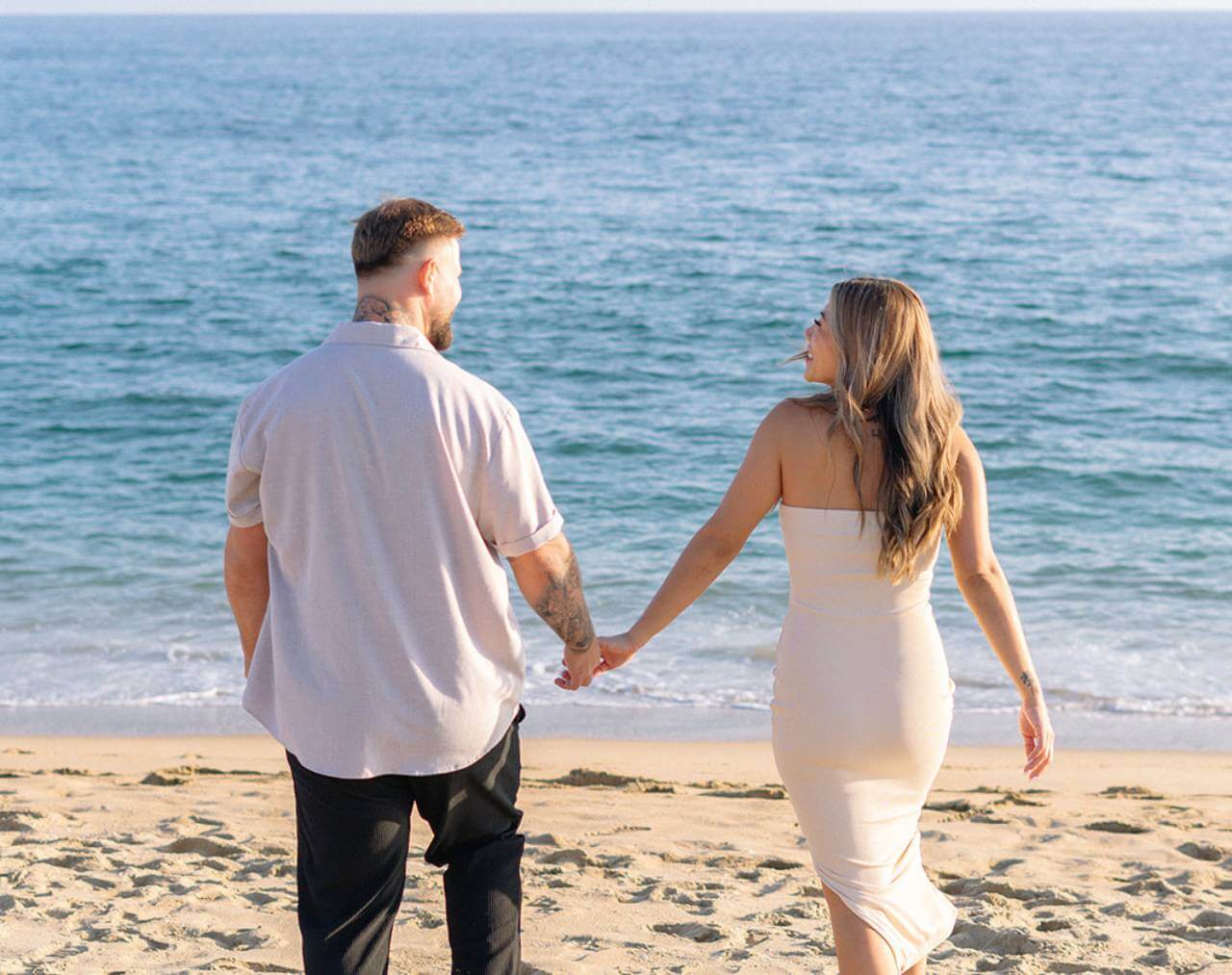
- Focus on interacting with your partner instead of performing for the camera. Learning how to pose for engagement photos is much easier when you use small movements like walking or whispering to create genuine, natural smiles.
- Give your hands a specific job so they do not feel awkward or stiff. You can hold your partner’s hand, lightly touch their arm, or put one hand in your pocket to help your body relax and look more comfortable.
- Stay as close together as possible to remove any gaps that make photos look formal. Shifting your weight to one hip and keeping your elbows and knees soft will help you look effortless and connected in every shot.
Unless you’re a professional model, knowing how to pose for engagement photos feels a bit like trying to solve a math equation in front of a crowd.
You’re excited to celebrate your love, but the moment the lens clears its cap, your hands feel like giant foam fingers, and your smile starts to twitch. We’ve seen it a thousand times, and we want you to know it’s completely normal.
Most people aren’t used to having their every movement documented, which is why we created the Anti-Awkward Toolkit. This guide is designed to move you away from stiff, “prom-style” posing and toward natural, effortless connection.
Quick Links:
- How to Pose Without Feeling Awkward
- 60-Second Engagement Photo Pose Reset
- Posing Toolkit Overview
- Anti-Awkward Toolkit for Photo Poses
- Make Your Engagement Photos Look Effortless
- FAQs
How to Pose Without Feeling Awkward
The biggest hurdle to a great photo isn’t your outfit or the lightingb it’s the “performance” of it all. Most people feel awkward because they think they have to act like a couple in a magazine. In reality, the best engagement photo poses happen when you stop performing and start interacting.
Copyright © Photo by Dolce Vita Makers
Our toolkit approach is built on a simple philosophy: fix the awkwardness first, and the poses will take care of themselves. Instead of memorizing fifty different body positions, we focus on small adjustments, the “tools” that make any position look natural. Worried about your hands, your height difference, or your “good side,” this guide provides a game plan.
In the sections below, we’ve broken down the eight essential tools for your session. Each tool includes 2–3 engagement shoot poses as examples and a specific prompt to help you get there.
If you’re feeling overwhelmed, don’t try to master them all at once. Just pick two tools like “Movement” and “Hand Placement” and start there. By focusing on these couple of photo tips, you’ll find that the “posing” part of the day becomes the easiest part.
Pro Tip:
- Spend five minutes practicing a few movements in front of a mirror before you leave the house. It might feel silly, but seeing how your body looks at different angles helps you feel much more confident once you are in front of the camera.
60-Second Engagement Photo Pose Reset
Before we dive into the specific tools, we need a “panic button” for when things feel stiff. If you find yourself holding your breath or your shoulders creeping up toward your ears, it’s time for a reset.
The Reset Checklist:
- Shoulders down: Drop them away from your ears.
- Elbows soft: Never lock your joints; a tiny bend looks more relaxed.
- Breathe out: Literally, take a loud, audible exhale together.
- Weight on one hip: Standing flat-footed and square to the camera can look rigid. Shift your weight to your back leg.
We like to follow the “Soft Rules”: soft hands, soft knees, and a soft smile. If you feel a “fake” smile coming on, shake your arms out, walk ten steps away from the camera, and reset.
According to Canon USA’s portrait posing tips, posture and relaxed hands are the foundation of any successful portrait. If you haven’t chosen your photographer yet, you might want to review some questions to ask a wedding photographer to ensure they are comfortable guiding you through these poses for engagement photos.
Copyright © Photo by Dolce Vita Makers
Using a quick warm-up like this ensures you don’t spend the first twenty minutes of your session looking like a deer in headlights.
Pro Tip:
- If you feel your facial muscles getting tired or your smile starting to fade, close your eyes for three seconds. When you open them, your face will naturally relax and your next expression will look much more genuine.
Posing Toolkit Overview
Think of this toolkit as your “cheat sheet” for the day. You don’t need to read it chronologically if you’re already on-site; just jump to the section that addresses what you’re struggling with most in the moment. This pose toolkit is designed to give you a clear pose game plan, so you never have to ask, “What do I do now?”
The Tools We’ll Cover:
- Natural Hand Placement: Ending the “what do I do with my hands?” crisis.
- Eye Line: Creating connection without the blank stare.
- Physical Distance: How to stand close without looking like a statue.
- Movement: Using motion to create engagement, photo poses ideas.
- Romance: Navigating intimacy without the “cringe” factor.
- Sitting: Mastering ground and bench poses.
- The Ring: Showcasing the sparkler naturally.
- Location Basics: Adapting your poses to your environment.
Anti-Awkward Toolkit for Photo Poses
If you only skim one part of this guide, make it this one. These aren’t “perfect poses” you have to memorize. They’re simple tools you can use in any position to look more natural fast.
Pick the tool that matches what feels awkward (hands, eye contact, standing too far apart), then use the prompt to create a real moment. Your photographer can capture the in-between seconds, which is where the best photos usually live.
Tool 1: Natural Hand Placement
The most common question photographers hear is, “What do I do with my hands?” When we don’t have a task for our hands, they tend to hang limply or clench into fists, making us look tense. These engagement picture poses solve that by following Rule 1: Hands always need a job.
Copyright © Photo by Dolce Vita Makers
Holding your partner’s hand, touching your own clothing, or tucking a strand of hair, a “busy” hand is a natural hand. Rule 2 is to create space; keeping your arms pinned to your sides makes your silhouette look wider. a tiny bend in the elbow creates a much more flattering line.
Pose Examples:
- One Hand Hold + One Hand Rest: Hold one of your partner’s hands at waist level. Use your other hand to lightly rest on their forearm or your own thigh.
- Pocket + Lean In: One partner puts a hand in their pocket (leave the thumb out for a cleaner look), while the other partner places a hand on their chest.
- Wrap From Behind: One partner stands behind the other, wrapping their arms around the waist. Connect your hands at the front to create a “closed” loop of connection.
Prompt Add-On:
“Squeeze hands three times and take one slow breath together.” This simple physical cue helps you focus on each other rather than the camera, leading to easy couple poses that feel grounded.
Pro Tip:
- Avoid pressing your arms tightly against your torso. Leaving a small amount of space between your arms and your body makes your silhouette look more natural and prevents your arms from looking wider than they actually are.
Tool 2: Where to Look for Real Connection
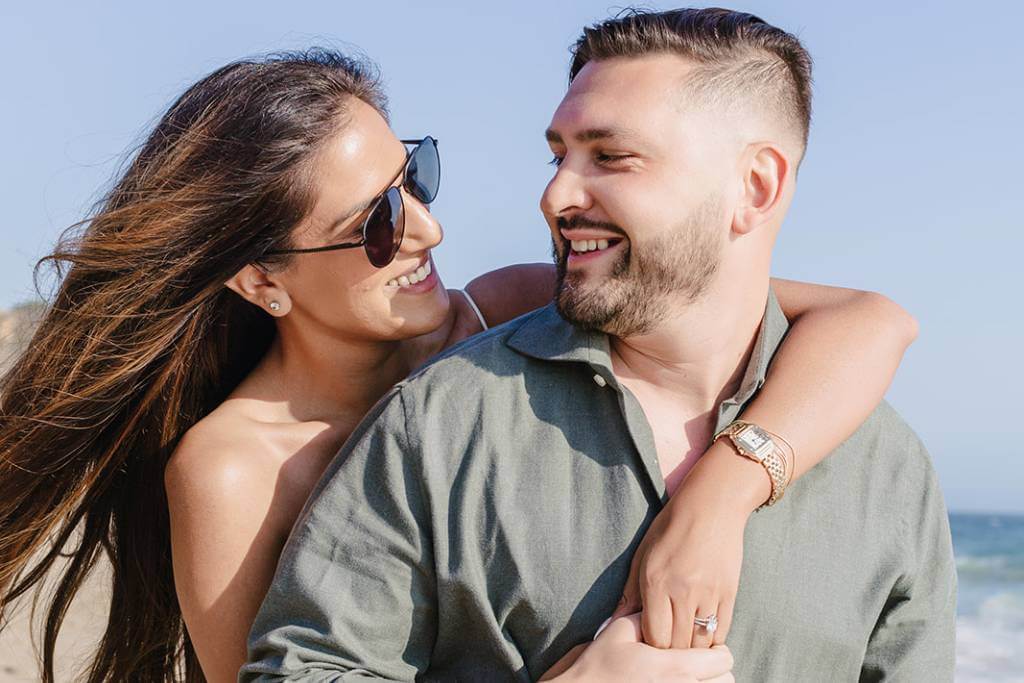
Staring directly into a lens for an hour is exhausting and rarely leads to “natural” photos. To fix the blank stare, we use the “3 Look Options.” You should either be looking at your partner, looking at the same thing in the distance, or occasionally looking at the camera.
For a cleaner angle, remember the “tiny chin tip.” Extend your chin slightly forward and then down. This elongates the neck and defines the jawline, which is a staple of natural couple portraits.
Copyright © Photo by Dolce Vita Makers
We also suggest the “Camera Last” rule: don’t look at the photographer until you’ve shared a real laugh or a quiet moment first.
Pose Examples:
- Forehead Touch + Eyes Closed: This creates an immediate sense of intimacy. Focus on the feeling of the touch rather than the photo.
- Look At Partner While Walking: As you walk toward or away from the camera, keep your eyes on each other. It creates a “caught in a moment” vibe.
- Same Direction Look: Both of you look out at the horizon or a scenic element. It makes the photo feel like a cinematic still.
Prompt Add-On:
“Tell them one thing you’re excited about doing together after the shoot is over.” (The “reward” talk usually leads to a genuine, relaxed smile).
Tool 3: How to Stand Close Without Getting Stiff
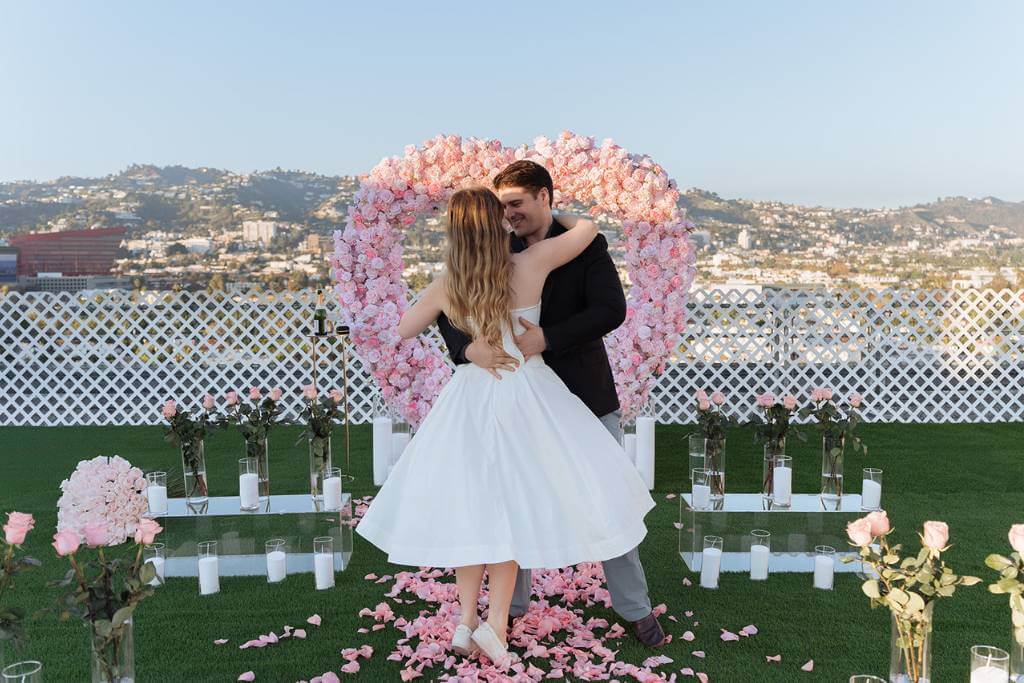
The “friend zone gap” is the enemy of great engagement poses for couples. If there is light visible between your torsos, the photo can feel disconnected. Our rule is “Close, Then Closer.” You want to remove the gap by finding multiple touch points, such as hips, shoulders, hands, or foreheads.
Copyright © Photo by Dolce Vita Makers
If standing still feels rigid, introduce micro-movement. Think of it like a slow sway you’d do while dancing in a kitchen. It keeps your muscles from locking up and makes the standing poses in your couple posing guide feel fluid.
Pose Examples:
- Chest-To-Shoulder Stack: One partner stands slightly behind and to the side, tucking their chest into the other’s shoulder.
- Side Hug + Turn In: Start in a side-by-side hug, then both turn 45 degrees toward each other so your hips touch.
- Slow Dance Hold: Traditional dance position, but keep your hands “soft” (no gripping) and your foreheads close.
Tool 4: Movement Poses that Look Candid
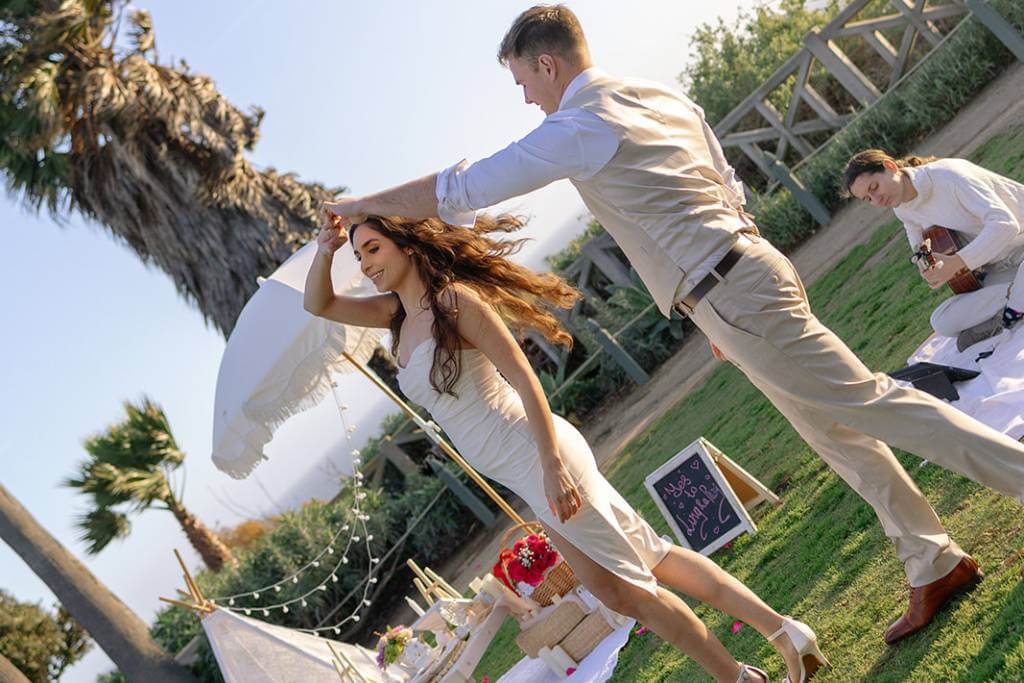
If you want unique engagement photo poses that feel like real life, you have to move. Movement is the ultimate cure for frozen bodies and fake laughs. When you move, your hands find natural places to land, and your facial expressions become more dynamic.
Copyright © Photo by Dolce Vita Makers
Don’t be afraid to ask your photographer to “shoot through the motion.” You don’t need to hold a pose while moving; just let the action happen. Use engagement photo prompts to keep the energy high.
Pose Examples:
- Slow Walk + Shoulder Bump: Walk toward the camera. Every few steps, gently bump your shoulders together to throw each other off balance (in a fun way).
- Half Twirl + Pull Back In: One partner twirls the other out, but instead of letting go, pulls them back into a tight hug.
- Stop-And-Whisper: Walk away from the camera, then stop suddenly and whisper a “secret” into your partner’s ear.
Prompt Add-On:
- “Walk like you’re both a little bit tipsy and trying to stay in a straight line.”
- “Try to hip-bump each other off the path.”
These couples posing prompts distract you from the camera and lead to the best candid moments.
Pro Tip:
- Wear comfortable shoes while you are moving between spots. If your feet are sore, it often shows in your facial expressions, so keep your dress shoes in a bag until you are ready to stand and pose.
Tool 5: Romantic Poses that Still Feel Natural
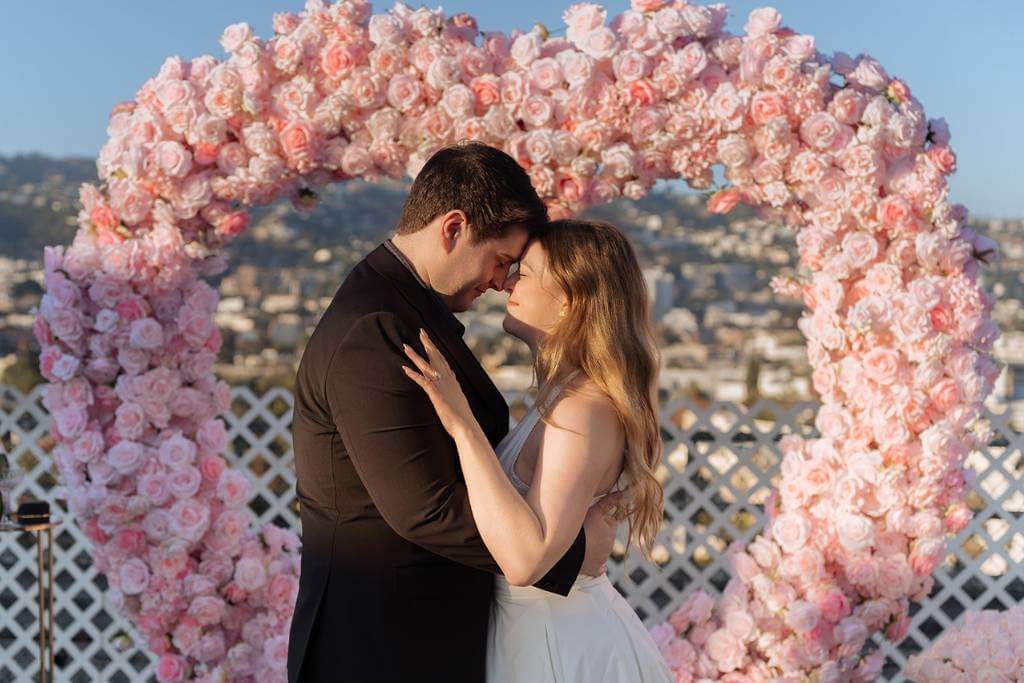
For many, the “romantic” part of the session is the most daunting. You might worry about looking “too much” or feeling forced. The secret is that romantic engagement photo poses do not have to be serious. In fact, the best engagement photo poses are often the ones where you are laughing through the romance.
Copyright © Photo by Dolce Vita Makers
Build up the intimacy slowly. Start with a cheek, temple, or forehead kiss. Often, the “almost kiss” (where your lips are an inch apart) looks better on camera than an actual kiss because it maintains the visibility of both faces.
As noted in a University of Wisconsin–Madison MIDUS research summary, affectionate touch significantly boosts relationship well-being and lowers stress—so lean into the touch to help the session feel more like a date and less like a chore.
Pose Examples:
- Temple Kiss + Smile: One partner kisses the other’s temple while the other looks at the camera with a relaxed smile.
- Nose Touch + Laugh: Rub your noses together like an “Eskimo kiss.” It almost always leads to a genuine laugh.
- Almost Kiss + Breathe Out: Get close enough to feel each other’s breath, then both exhale. It creates a very soft, editorial look.
Tool 6: Sitting Poses for Outdoor Engagement Photos
Sitting poses offer a great change of pace, but they can be tricky because of slouching. When sitting, the goal is to keep your posture tall and use different “levels” to create visual interest. Instead of sitting square-on, sit at an angle to the camera.
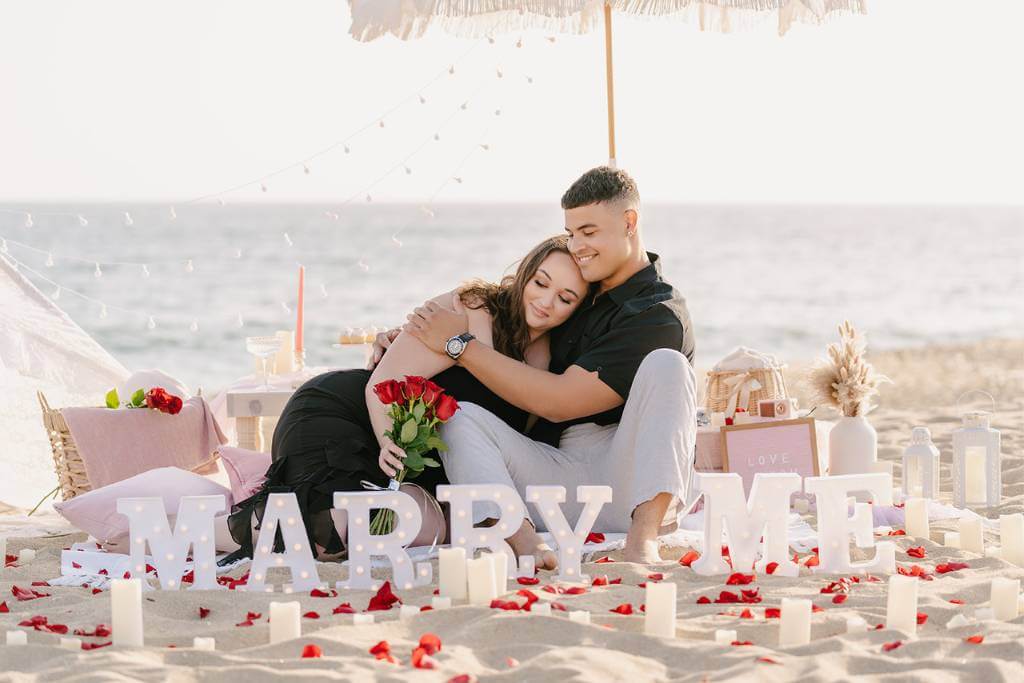
Copyright © Photo by Dolce Vita Makers
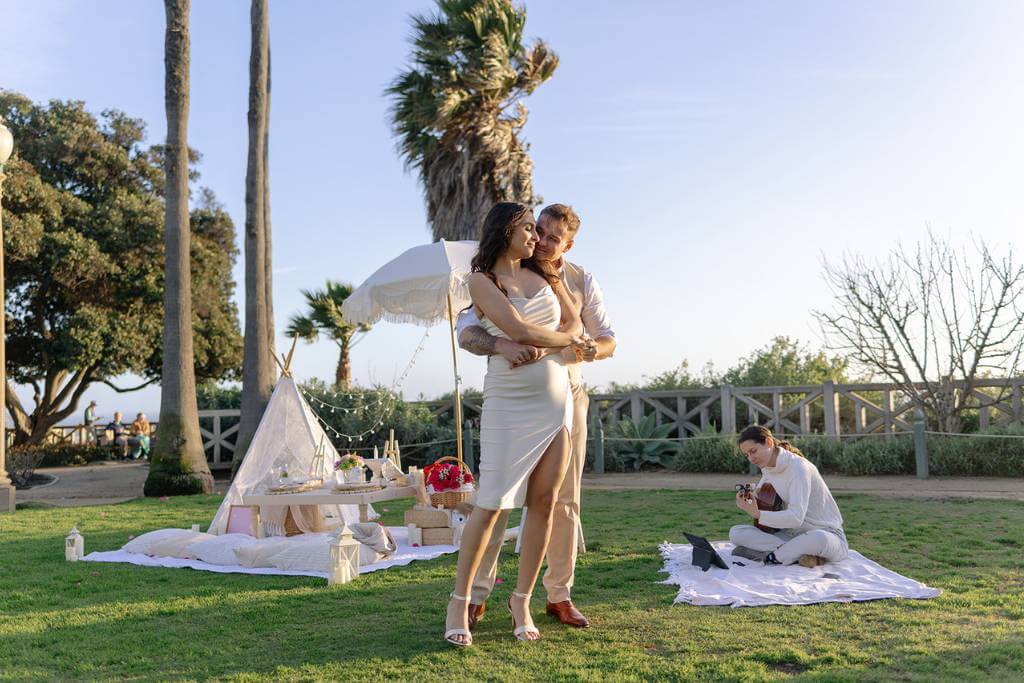
Using a luxury picnic setup for engagement photos or a simple park bench, props can help give your hands a place to go. A blanket, a basket, or even a glass of champagne can make outdoor engagement photo poses feel more like a scene and less like a portrait.
Pose Examples:
- Side Sit + Lean In: Sit side-by-side on a blanket. One partner leans their weight onto the other, resting a head on a shoulder.
- One Kneels, One Sits: Have one partner sit on the ground while the other kneels behind them, wrapping their arms around. This creates a beautiful “stacked” look.
- Picnic Reach: If you have a picnic proposal idea for photo-ready moments, use the items. Reach for a strawberry, fix your partner’s hair, or clink glasses.
Tool 7: Engagement Ring Poses that Don’t Look Staged
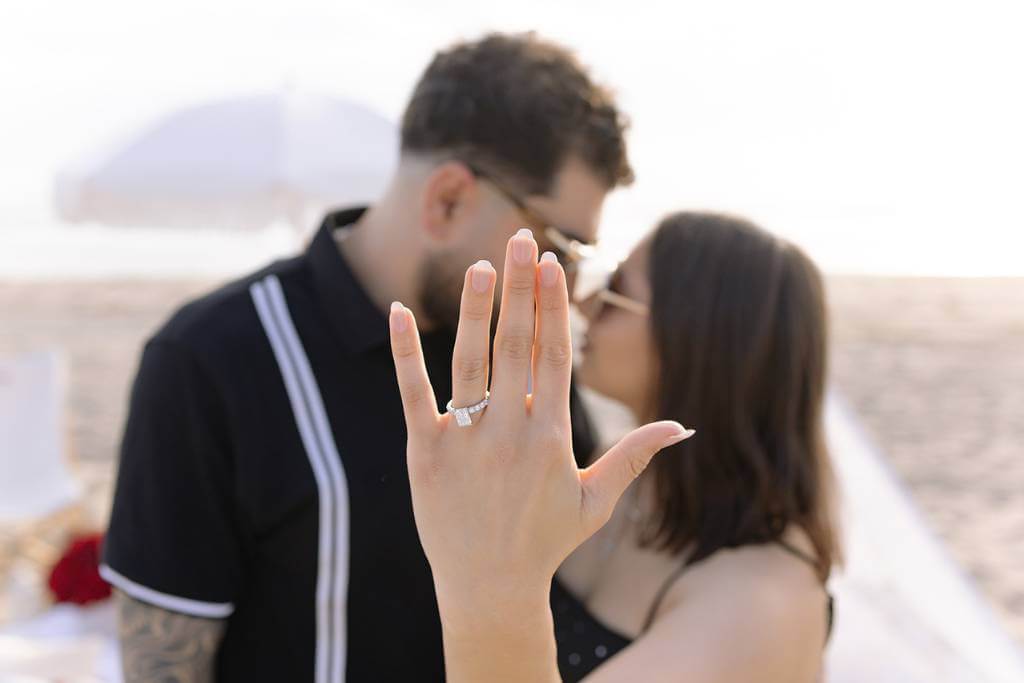
Your ring is a star of the show, but “hand-only” shots can sometimes feel a bit clinical. To make your engagement shoot poses feel integrated, we suggest that ring shots should still tell a story. The best ring photos happen when the hand is doing something natural, resting on a chest, tucked into a lapel, or holding a cheek.
Copyright © Photo by Dolce Vita Makers
You also want to consider the framing. Your photographer can take a “wide” shot of you hugging, a “mid” shot of your upper bodies, and then a “close” shot of the ring hand, all from the same pose. This ensures you have variety without having to reset a dozen times.
Pose Examples:
- Hand on Chest + Hug From Behind: The partner with the ring places their hand on the other’s chest while being hugged from behind.
- Linked Hands + Ring Toward Camera: Hold hands naturally, but slightly tilt the ring finger toward the lens.
- Forehead Touch + Hands Centered: As you touch foreheads, bring both of your hands up to rest on each other’s arms, keeping the ring visible in the center of the frame.
If you are curious about the traditions or “rules” of the jewelry itself, you can read more about which finger the engagement ring goes on to ensure everything is perfectly in place for the close-ups.
Pro Tip:
- Since your hands will be a major focus, remember to moisturize and clean your ring the morning of the shoot. These tiny details make a huge difference in high-quality close-up photos.
Tool 8: Height Difference Poses That Look Natural
Height differences can look amazing on camera, but they can feel awkward if you try to “fix” them by stretching your neck or standing stiffly. The goal is not to match heights. The goal is to match energy by stacking your bodies, using levels (steps, sitting, leaning), and keeping your touch points close.
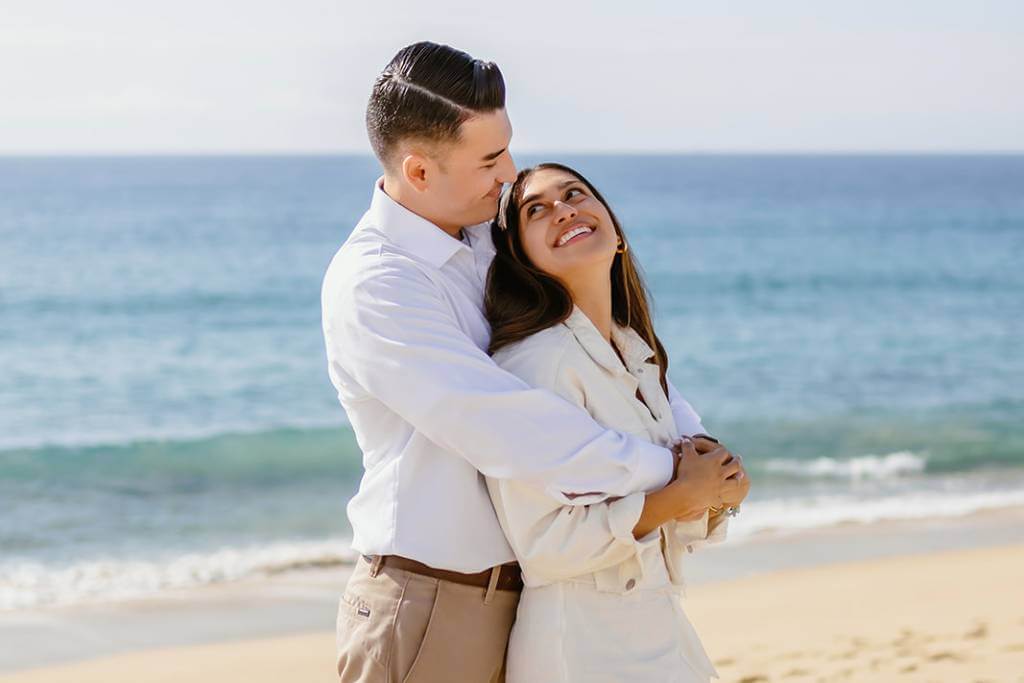
Copyright © Photo by Dolce Vita Makers
A simple rule that helps is “Meet at the forehead.” Instead of forcing a full face-to-face pose, aim for a forehead or temple touch. It keeps both faces visible and looks effortless.
Pose Examples:
- Step + Lean: The shorter partner stands one step up (curb, stair, rock). Both lean in for a forehead touch.
- Chest-to-Shoulder + Hand Hold: The taller partner stands slightly behind and to the side. The shorter partner leans back into them while holding hands at waist level.
- Seated Level Match: Sit together on a bench or low wall. Angle your bodies toward each other and bring your knees and shoulders close.
Prompt Add-On:
“Take turns saying ‘three things I love about you’ quietly, one at a time.” This keeps your face soft and your expressions real.
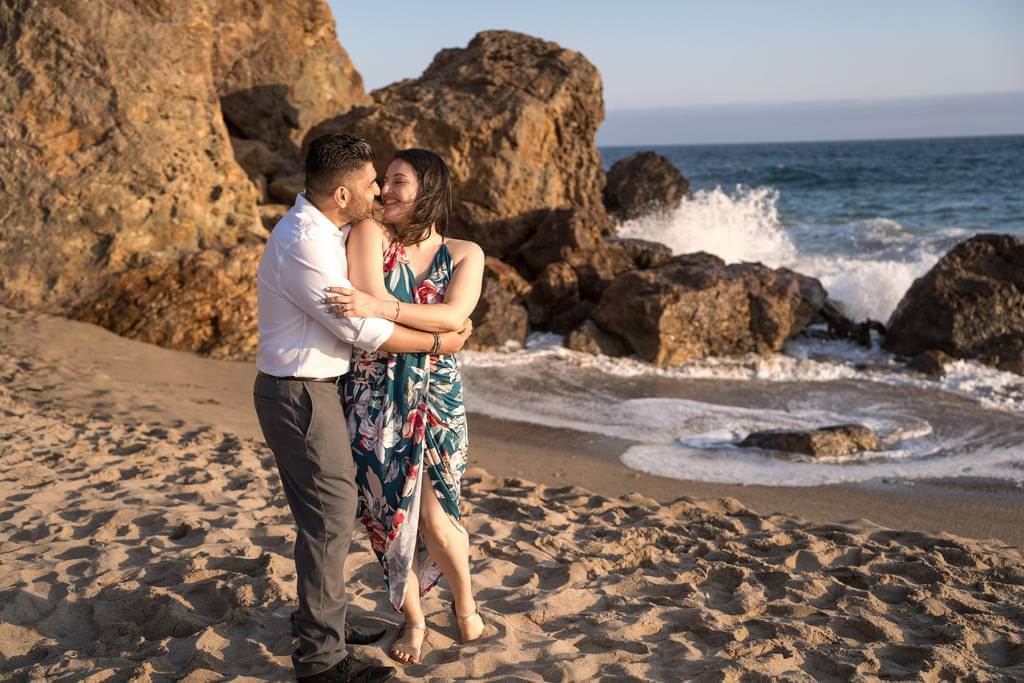
Tool 9: Transitions (The Secret to Candid-Looking Photos)
A lot of the best photos happen between poses. The moment you stop trying to hold still, your shoulders drop, your hands relax, and you start looking like yourselves again. Transitions keep you from freezing and give your photographer a steady stream of natural moments to capture.
Copyright © Photo by Dolce Vita Makers
Think “pose, then move.” Hold a setup for two seconds, then do a small action like turning, walking, or pulling in closer.
Pose Examples:
- Walk → Stop → Hug: Walk together, then stop and pull into a tight hug like you got good news.
- Turn-In Reset: Start side-by-side, then both turn toward each other and touch foreheads for one breath.
- Spin Into Shoulder Lean: A half twirl ends with the twirled partner leaning into the other’s shoulder while laughing.
Prompt Add-On:
“On three, change one thing. Switch which hand you’re holding, shift hips closer, or change where you’re looking.” (Your photographer can shoot through the change.)
Tool 10: Location-Based Poses for Engagement Pictures
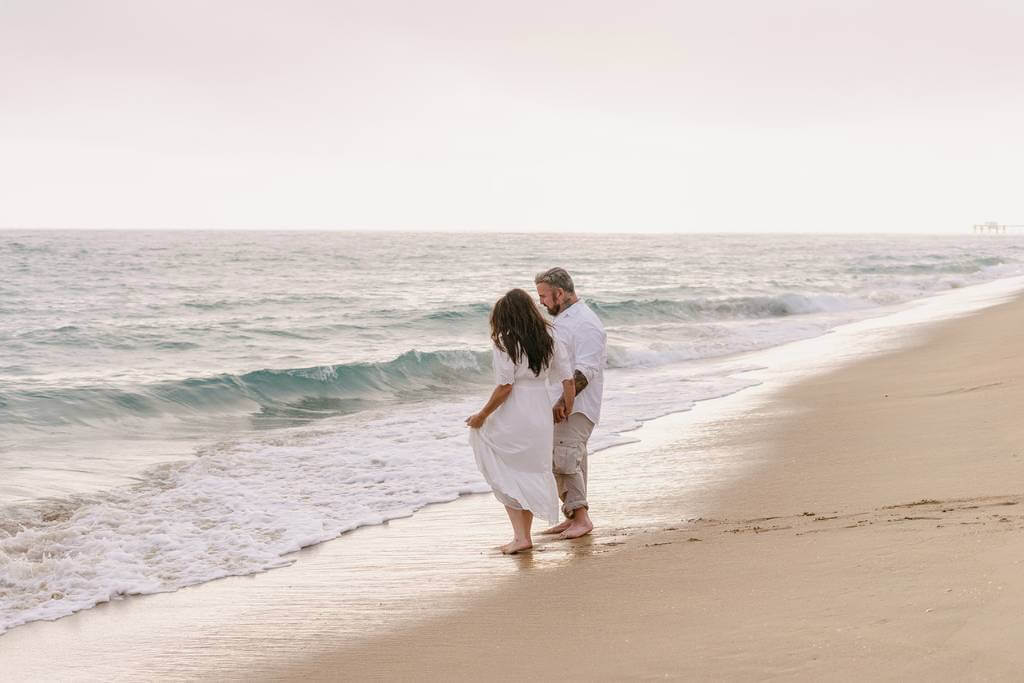
Your environment should dictate your movement. We recommend a “3-Spot Plan”: find a wide-shot spot (for the landscape), a close-up spot (with a clean background), and a walking spot (for movement).
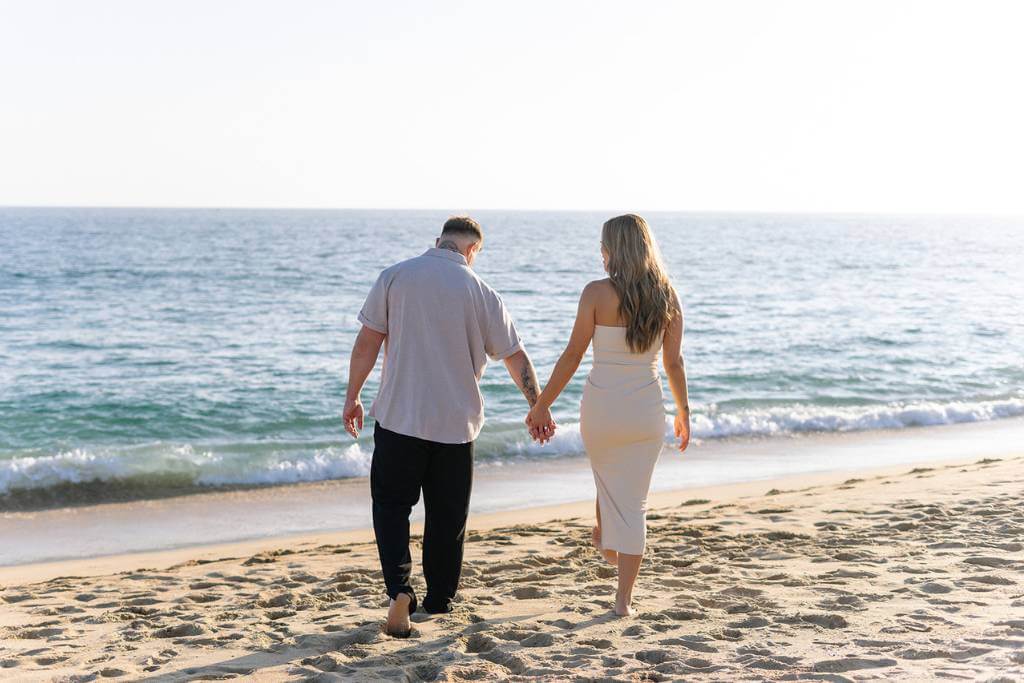
- Beach Settings: If you’re looking at beach proposal ideas for romantic pictures, focus on the movement of the water. Walk along the shoreline, look back over your shoulder, or do a “lift” pose if you’re feeling adventurous.
Copyright © Photo by Dolce Vita Makers
- Park Settings: Utilize the greenery. Check out park proposal ideas for natural engagement photos for inspiration on using benches, trees, and open fields to your advantage.
- Restaurant/City Settings: These call for a “date-night” vibe. Use a restaurant proposal guide for classy engagement photos to master the “table lean.” Sit close, put your hands on the table, and focus on “cheers-ing” your drinks or laughing over a shared dessert.
If you are still in the planning phase, knowing the best places to propose in Los Angeles can help you choose a backdrop that fits your personal style.
A private proposal idea for intimate photos or a grand proposal setup in Los Angeles, the location will help guide your engagement photo pose ideas. Don’t forget the logistics, like what knee you propose for photos, to ensure the “big moment” is captured perfectly.
Make Your Engagement Photos Look Effortless
The ultimate secret to how to pose for engagement photos is to remember that the photos are a celebration, not a test. If you find yourself getting caught up in the “right” way to stand, take a second to look at your partner and remember why you’re there.
Pick two tools from this toolkit, maybe “Hand Placement” and “Eye Line,” and practice them for five minutes in the mirror before you leave. Once you’re at the session, let the prompts do the rest of the work.
At Dolce Vita Makers, we believe that the best photos come from environments that feel as good as they look. That is why we specialize in creating styled proposals and luxury picnics that provide an instant, “photo-ready” backdrop.
When the setting is already beautiful and reflects your personality, you don’t have to work as hard to make the photos look effortless. Knowing when to propose and having a planned setting can remove 90% of the stress, leaving you free to just enjoy the moment.
Ready to capture your own “Anti-Awkward” moment?
Explore our styled proposal and luxury picnic experiences to create a photo-ready setup that makes posing for engagement photos the easiest thing you’ll do all year.
FAQs
How do we look natural if we hate posing?
The best way to look natural is to replace “poses” with “actions.” Instead of standing still, try walking, slow-dancing, or whispering a joke. Focus on your partner rather than the camera lens.
What should we do with our hands in engagement pictures?
Give them a job! Hold hands, put a hand in a pocket (thumb out), touch your partner’s arm, or lightly hold your own clothing. Avoid clenching your fists or leaving your arms flat against your sides.
How close should we stand for engagement photos?
Closer than you think. If there is a gap between your bodies, it can look formal or stiff. Aim for multiple touch points—like hips and shoulders—to create a sense of connection.
What are the best outdoor engagement photo poses for beginners?
Walking poses are the easiest for beginners. Walking side-by-side or one partner leading the other naturally creates movement and relaxed facial expressions.
How long should an engagement photo session be?
Most engagement photoshoot poses take time to settle into. A 60 to 90-minute session is usually the “sweet spot” to get past the initial nerves and capture a variety of engagement photo poses.