


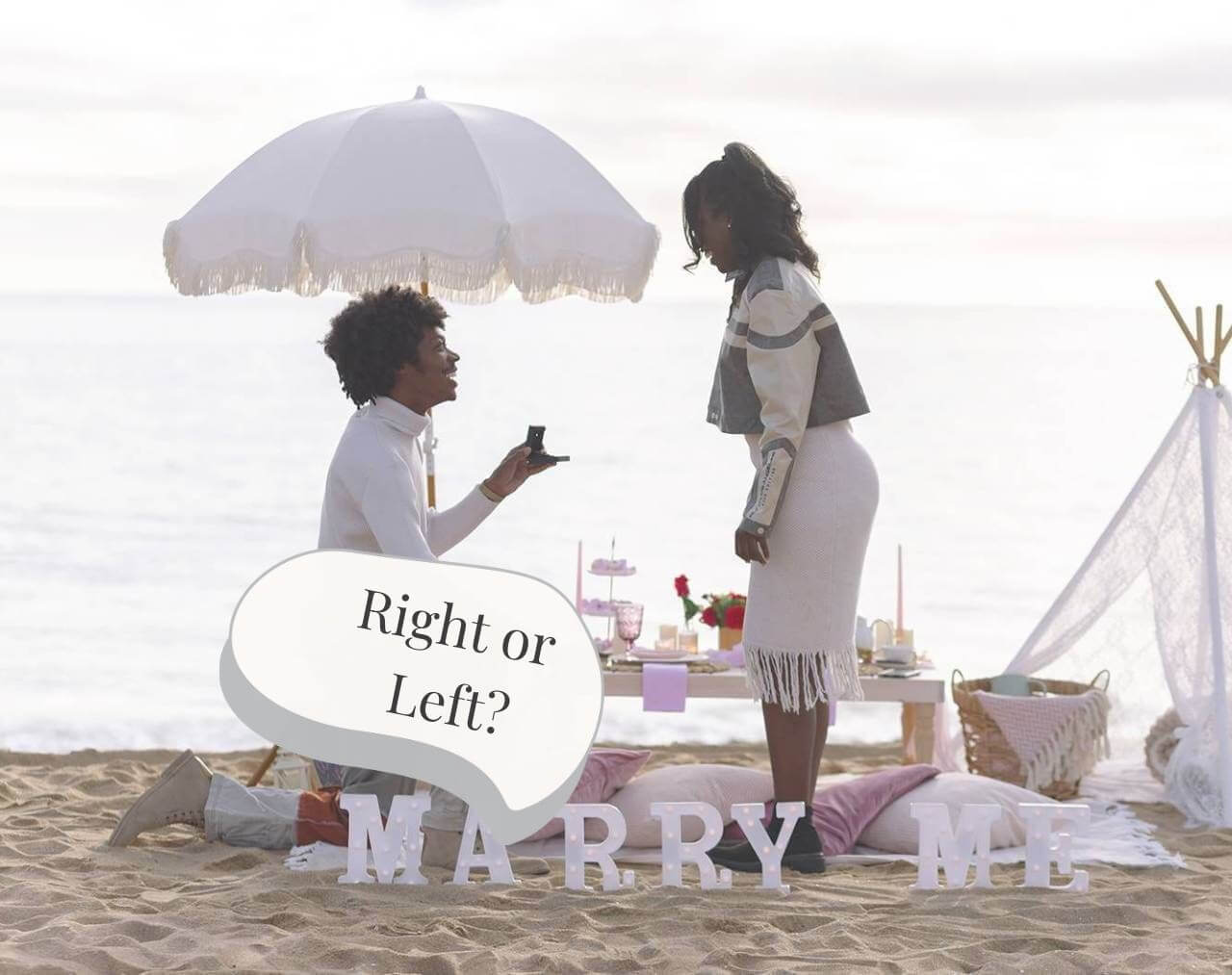
As proposal planners, we see this little panic all the time. The ring is ready. The location is perfect. The love of your life is right there. Then your brain suddenly asks the most random question possible: “Wait, which knee am I supposed to use?”
We once had to quietly signal the answer to a nervous proposer right before the big moment. He dropped to the sand, opened the ring box, asked the question, and she said yes.
The moment was beautiful, but it reminded us how one tiny detail can create a lot of stress. So, if you have ever searched “what knee do you propose on?”, we are breaking it down clearly. Here is which knee to kneel on, why it matters less than you think, and how to pull it off without wobbling, overthinking, or nearly face-planting into the proposal setup.
Quick Answer:
- The short answer is the left knee. Tradition dictates that your left knee touches the ground while your right knee stays up. This creates a stable base. It also makes practical sense for most people. If you are right-handed, holding the ring box in your left hand lets you open it with your right hand. It frames the moment perfectly. However, do not overthink this. If you drop to your right knee in the heat of the moment, nobody is going to stop the proposal. The gesture matters more than the geometry.
Quick Links
- Left or Right Knee for Proposal
- What Does Getting Down on One Knee Symbolize
- How to Kneel for a Proposal: Steps that Feel Natural
- Situational Playbooks: Make the Kneel Work Anywhere
- Photo Tips for the Kneel
- Do You Have to Get on One Knee to Propose?
- Common Mistakes to Avoid
- Script Starters and Nerves Control
- What Hand Should You Hold the Ring Box In?
- Focus on the Moment, Not Just the Knee
- FAQs
Left or Right Knee for Proposal
If you search for “what knee are you supposed to propose on,” the results almost overwhelmingly point to the left. This stems from historical etiquette and the way knights were often depicted genuflecting.
But here is the reality from our side of the camera: we have seen hundreds of proposals. About 75% of proposers use the left knee. The other 25% use the right. Both result in tears, hugs, and a “yes.”
Choosing the “left knee proposal” stance is safer if you want to follow the textbook rules. Choosing the right one is fine if you have a bad left knee or just forgot the plan when the adrenaline hits.

Copyright © Photo by Dolce Vita Makers
Does it Matter Which Knee You Propose On?
Honestly, no. It does not strictly matter. We have never seen a partner say “no” because the knee placement was off. The emotional weight of the question overpowers the mechanics. Prioritize your stability and comfort over a rigid rulebook.
What Does Getting Down on One Knee Symbolize
Why do we do this at all? It feels like a movie trope, but the roots go deeper. The meaning of getting on one knee is rooted in respect, surrender, and devotion. By lowering your height physically, you are signaling that you are offering yourself to your partner.
Historically, this posture mimics the way knights or subjects would show loyalty to royalty. It is the ultimate physical sign of vulnerability.
Why Do Men Get Down on One Knee to Propose?
It is a blend of medieval history and modern marketing. Knights bowed to their lords as a sign of servitude and respect. Over centuries, this evolved into courtly love.

Copyright © Photo by Dolce Vita Makers
Today, it serves a practical purpose too. It places the ring at the partner’s eye level and creates that classic silhouette that photographers love. It signals to everyone around you and your partner that something significant is happening.
Which Knee to Propose On: Catholic Tradition
For those interested in the religious nuance, specifically which knee to propose on in the Catholic style, there is a distinction. In Catholic tradition, you genuflect on the right knee for God (facing the tabernacle). You genuflect on the left knee for dignitaries, kings, or, in this case, your future spouse.
According to the USCCB guidelines on genuflection, the right knee is reserved for the Eucharist. So, using the left knee for a proposal actually keeps you in line with liturgical etiquette.
How to Kneel for a Proposal: Steps that Feel Natural
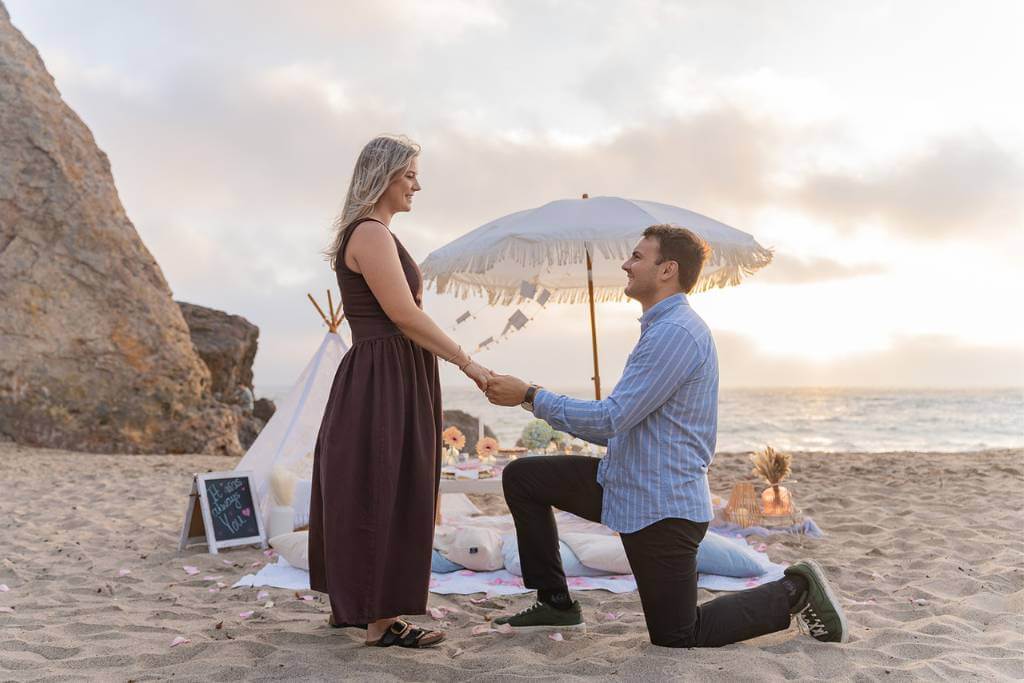
We watched a guy trip over his own shoelaces once. He recovered, but he taught us a valuable lesson: practice the mechanics. Here is a simple playbook on how to get down on one knee smoothly.
Copyright © Photo by Dolce Vita Makers
- Check Your Distance. Do not stand too close. If you are toe-to-toe, kneeling will look awkward, like you are inspecting their shoes. Take one small step back.
- The Drop. Step back with your left foot. Lower your left knee to the ground. Keep your back straight.
- The Box Reveal. Pull the box out after you are stable. Hold it with two hands if you are shaking (you will be).
- The Question. Look them in the eyes. Ask. Wait for the answer.
- The Stand. Once the ring is on, check our guide on the wedding ring finger to get that right, and stand up by pushing off your front heel. Hug.
Situational Playbooks: Make the Kneel Work Anywhere
We plan proposals all over Los Angeles, from beaches to rooftops. The environment changes how you should kneel. A sidewalk is stable; sand is not. Here are our field notes on making it work in different terrains.
1. Beach Proposal Tips
When you step back to kneel, dig your toe in slightly for grip. Avoid kneeling right at the water’s edge if the tide is rising—we’ve seen wet pants ruin the vibe. Also, check for sharp shells before your knee hits the ground.
2. Park Proposal Tips
Grass can be wet or muddy even on sunny days. Take a quick look at the ground before you commit. If you are proposing on a picnic blanket, scoot off the blanket so your knee is on the grass, or use a pillow.
- See our full list of park proposal ideas.
3. Restaurant Proposal Tips
Space is tight. Do not kneel in the aisle where waiters are carrying hot food. Ideally, ask for a corner booth. If you can’t kneel fully, a “half-stand” or just presenting the ring while seated is acceptable in crowded spots.
- Read our complete restaurant proposal guide.
4. Rooftop or City Views
Wind is the enemy here. If you are in a high-rise, hold that ring box tight. The ground is usually hard concrete, so don’t drop your knee too fast. Do it gently to save your kneecap.
- Looking for a spot? Here are the best places to propose in Los Angeles.
5. Romantic At-Home or Private Setup
This is the most controlled environment. You can use a rug, a cushion, or flower petals to soften the landing. You have time here. Slow it down.
- Planning a cozy setup? Look at our picnic proposal tips.
If you want to guarantee the setup is perfect without doing the heavy lifting, our team of proposal planners in Los Angeles can handle the logistics for you.
Photo Tips for the Kneel
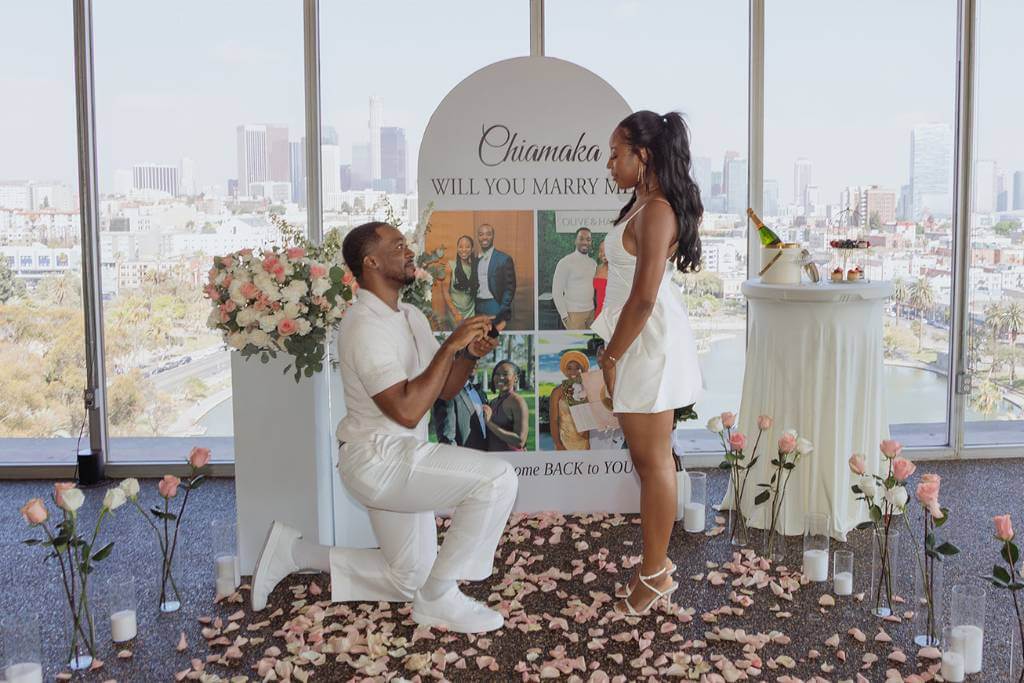
You want the photo to look iconic. The biggest mistake we see? The “Hunch.” When you kneel, your instinct is to curl forward to protect the ring. Don’t.
Copyright © Photo by Dolce Vita Makers
Keep your chest up and shoulders back. This looks confident and lets the light hit your face. Also, angle your body slightly toward the photographer (or your hidden phone setup) rather than showing your back directly to the camera.
Once they say yes, stay down for three extra seconds. It feels like an eternity, but it gives the photographer time to catch the reaction. Then stand up.
- If you are hiring a pro, make sure you know the right wedding photographer questions to ask beforehand.
Do You Have to Get on One Knee to Propose?
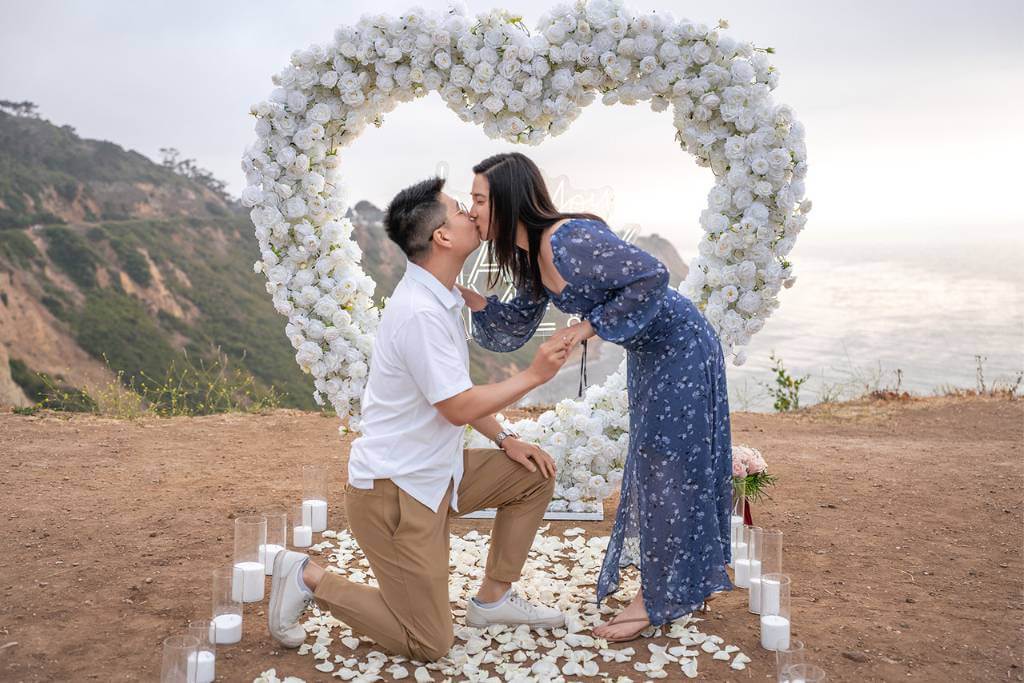
Absolutely not. We have planned beautiful proposals where no one kneels. Maybe you have a bad ACL. Maybe the ground is wet. Maybe it just feels too theatrical for your relationship.
Copyright © Photo by Dolce Vita Makers
You can propose standing up and holding hands. You can propose sitting on a park bench. You can propose while hiking. The “knee drop” is a symbol, not a law. If you skip it, just make sure your eye contact and words carry the weight of the moment.
- For more alternative approaches, browse our blog about proposing without a ring.
Common Mistakes to Avoid
Even with the best plans, nerves take over. Here are three quick things to watch out for:
- The Pocket Struggle. Do not keep the ring box in a tight pair of jeans. We have seen proposers wrestle with their own pants for 20 seconds while on one knee. Keep it in a jacket pocket or a loose fit.
- Blocking The Ring. When you open the box, hold it at the bottom. Do not cover the diamond with your thumb.
- Kneeling Too Far Away. If you have to reach out like you are passing salt across a long table, you are too far. Close the gap.
Script Starters and Nerves Control
Your heart will be pounding. It is normal to forget your speech. If your mind goes blank, just remember: Past, Present, Future.
- “I loved you when we met…” (Past)
- “I love who we are today…” (Present)
- “I want to build a life with you forever…” (Future)
Take a deep breath before you drop. That one breath centers you.
- Need the right background track for this speech? Check our list of proposal songs.
What Hand Should You Hold the Ring Box In?
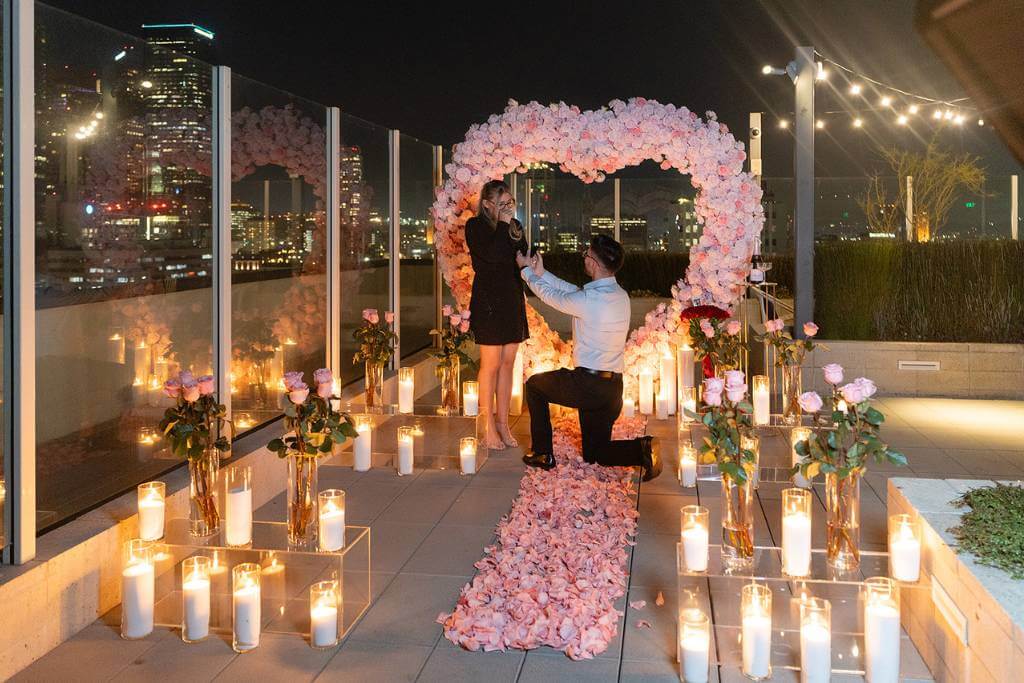
Hold the ring box in your non-dominant hand and open it with your dominant hand. For most right-handed proposers, this means holding the box in your left hand and opening it with your right. This keeps the small movement in your stronger hand, which helps if your fingers are shaking.
Copyright © Photo by Dolce Vita Makers
If you are left-handed, reverse it. The goal is not to follow a strict rule. The goal is to keep the box steady, open it smoothly, and face the ring toward your partner.
A few simple rules help the moment look cleaner:
- Keep the box facing your partner, not yourself.
- Hold it high enough so they can see the ring clearly.
- Avoid covering the ring with your thumb.
- Use both hands if you feel nervous or shaky.
- Do not switch hands while speaking unless you need to.
If you are using the classic left-knee stance, holding the box in your left hand and opening it with your right usually looks natural. Once the box is open, look at your partner, not the ring.
Focus on the Moment!
The left knee is the traditional choice for a proposal, but it is not the only acceptable choice. If your right knee feels stronger or your nerves take over, the moment can still be beautiful. Your partner will remember your words, your eye contact, the ring, and the feeling of being chosen. They will not be checking your knee placement.
What matters most is staying steady, present, and sincere. Practice the movement once or twice, check the ground before you kneel, keep the ring box facing your partner, and slow down enough to let the moment breathe. Small details can make the proposal smoother, but they should never steal focus from the reason you are there.
Ready to plan a proposal that looks effortless and stays personal? Dolce Vita Makers can handle the setup, styling, location details, and behind-the-scenes timing so you can focus on the question. Start planning your Los Angeles proposal with Dolce Vita Makers today.
FAQs
What knee are you supposed to propose on?
Tradition says the left knee. It is the standard pose you see in movies and royal history. But if you use the right, it is 100% valid.
Does it matter which knee you propose on?
No. Your partner is looking at your face and the ring, not your knees. Do what feels stable.
How can I get down on one knee if my knee hurts?
Don’t risk injury for a photo. Use a pillow, propose while sitting on a bench, or stay standing. A proposal should be memorable, not painful.