

Key Takeaways:
- Use a structured engagement ring checklist to score your progress on style, budget, and diamond specs. If your total score is 70 or higher, you are ready to buy with confidence and avoid costly mistakes.
- Focus on the diamond cut above all else to ensure the ring has the best sparkle. Make sure to match the metal and setting to your partner’s daily habits, like choosing a low-profile design for someone with an active job.
- Set a firm budget based on your own finances rather than outdated rules. You can save money while getting a beautiful ring by choosing lab-grown diamonds or buying a stone just under a full carat weight.
Buying an engagement ring is arguably the most significant purchase you will make, not just because of the price tag, but because of what it represents.
It is easy to feel overwhelmed by the pressure to get the “perfect” ring, the complexity of diamond specifications, and the nuances of your partner’s style. We created this guide to transform that stress into a structured, manageable process.
Our goal is to help you learn how to choose an engagement ring with total clarity. By using this engagement ring checklist, you can move from uncertainty to absolute confidence, ensuring you avoid costly mistakes and pick a piece they will treasure forever.
To keep you on track, we use the “70+ Rule”: score your progress as you go, and if your total is under 70, pause to address your weak spots before you swipe your card.
Quick Links:
- A Smarter Engagement Ring Checklist
- Confidence Score Setup
- 10 Engagement Ring Checklist Checkpoints
- Style Shortcuts for the Right Ring
- Engagement Ring Budget Tips
- Proposal Score Boosters
- Your 70+ Score: Ready to Propose
- FAQs
A Smarter Engagement Ring Checklist
The traditional way of buying a ring often involves walking into a store and hoping a salesperson points you in the right direction.
We believe in a smarter approach. This system isn’t about finding a “perfect” ring; perfection is subjective. It’s about finding the right ring for your partner’s specific taste, lifestyle, and your shared financial goals.
Copyright © Photo by Dolce Vita Makers
The “Confidence Score” helps you identify exactly where you are prepared and where you are guessing. By the end of this guide, you won’t just have a ring; you’ll have the peace of mind that comes from knowing you did your homework.
Confidence Score Setup
To use this guide effectively, we’ve broken the process down into 10 essential checkpoints. Each checkpoint is worth up to 10 points. As you read through each section, give yourself an honest score from 0 to 10 based on how settled you feel in that category.
Here is what your final score will mean:
- 80–100: You are confident, prepared, and ready to buy.
- 70–79: You are close! Tighten up one or two specific areas to reach full certainty.
- Under 70: Slow down. Use our “boosters” to gather more information. Buying now might lead to “buyer’s remorse” or a ring that doesn’t quite fit their style.
Be honest with yourself as you learn how to find the right engagement ring. There is no need for perfection on the first pass; the goal is simply to know how to pick the right engagement ring for your unique situation.
10 Engagement Ring Checklist: Checkpoints
As you move through these ten steps, keep a tally of your points. Use this engagement ring checklist to track your progress and ensure no detail is overlooked.
Checkpoint 1: Style Snapshot
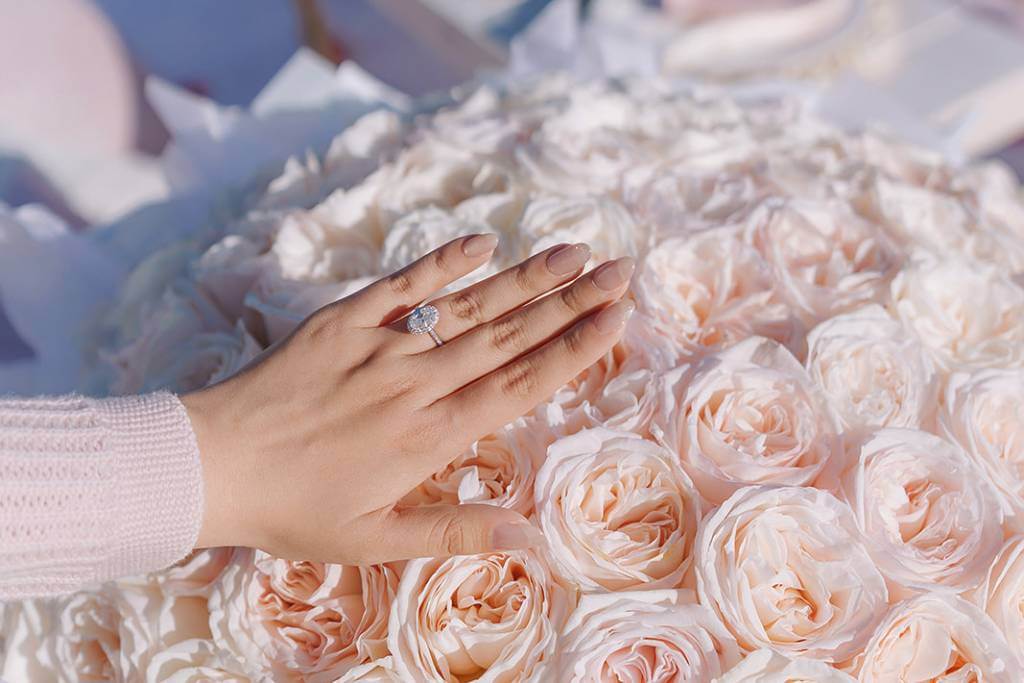
Understanding your partner’s aesthetic is the foundation of a successful purchase. To find out how to know what engagement ring you want for them, start by looking at their daily jewelry. Do they wear delicate gold pieces or chunky silver? Have they “accidentally” left a Pinterest board open or sent you photos of friends’ rings?
Copyright © Photo by Dolce Vita Makers
If you are still asking yourself, “What engagement ring is right for me to buy for them?” try to categorize their style into one of these buckets: classic, modern, vintage, glam, or minimal.
Score Yourself: _/10
- Check their current jewelry (metal color and stone size).
- Ask their best friend or sibling for “stealth” intel.
- Quick Action: If you’re unsure, pick two styles that seem most likely and only shop within those two lanes to avoid choice paralysis.
Pro Tip:
- Take a quick photo of your partner’s current jewelry box when they are out of the house. Showing these photos to a jeweler is the fastest way to complete this part of your engagement ring checklist because it reveals if they prefer warm gold tones or cool silver tones.
Checkpoint 2: Lifestyle Fit
A ring shouldn’t just look good in a box; it has to survive real life. Consider their daily routine: do they work with their hands, hit the gym daily, or wear medical gloves? What makes a good engagement ring is often its ability to be worn comfortably and safely.
The best type of engagement ring for an active person is usually a low-profile setting that won’t snag on clothes or equipment.
Score Yourself: _/10
- Identify high-impact hobbies (rock climbing, gardening).
- Check if their job requires frequent hand-washing or gloves.
- Balance the “wow factor” with daily comfort.
Checkpoint 3: Stone Choice
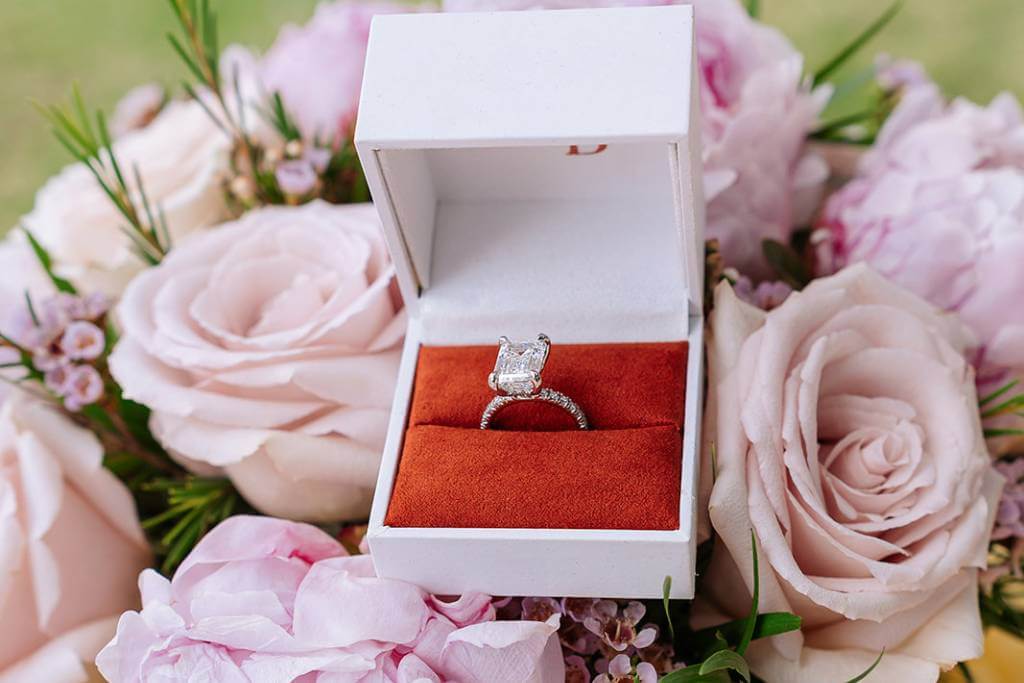
Deciding between a diamond and an alternative stone is a major milestone in picking an engagement ring. Today, many couples choose lab-grown diamonds, which offer the same physical properties as natural stones at a more accessible price point, or unique alternatives like sapphires and moissanite.
Copyright © Photo by Dolce Vita Makers
There is no wrong answer, only what fits your values and budget. When learning how to pick out an engagement ring, make sure you understand the stone’s durability and long-term care needs.
Score Yourself: _/10
- Discuss (or subtly probe) views on natural vs. lab-grown.
- Research the “Mohs Scale” of hardness if choosing a non-diamond.
- Confirm the jeweler’s return and exchange policy for the specific stone.
Checkpoint 4: Diamond 4Cs Basics
If you choose a diamond, you must understand the 4Cs: Cut, Color, Clarity, and Carat. When considering how to choose a diamond for an engagement ring, prioritize the Cut above all else; it’s what creates the sparkle.
We recommend following GIA’s explanation of the 4Cs to understand how these factors affect value. What to look for in an engagement ring stone is a balance where the diamond looks white and eye-clean without paying for “flawless” grades that the naked eye can’t see.
Score Yourself: _/10
- Focus on an “Excellent” or “Ideal” cut.
- Look for “eye-clean” stones (usually VS2 or SI1 clarity).
- Ensure the stone is GIA- or IGI-certified.
Pro Tip:
- When you are looking for the best value, prioritize an eye-clean stone. This means the diamond has small imperfections that you cannot see without a magnifying tool. Choosing an eye-clean diamond allows you to spend more of your budget on a higher cut grade for better sparkle.
Checkpoint 5: Shape Match
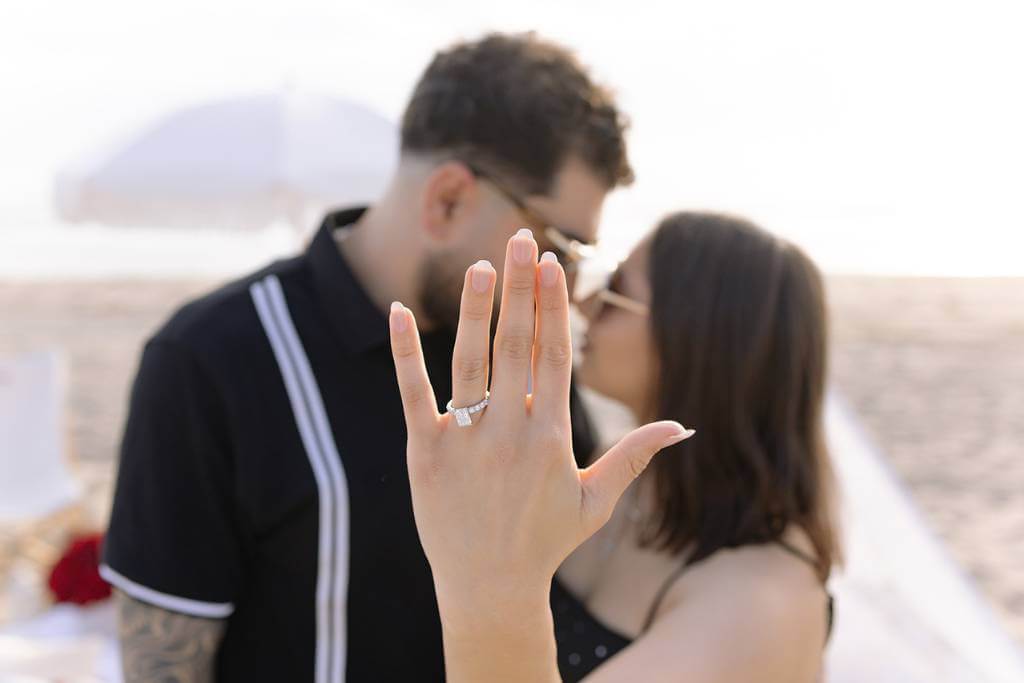
The shape of the stone (Round, Oval, Emerald, Pear, etc.) is the most visible part of the ring. Shape is a matter of personal taste, but it also affects price and finger coverage. For instance, ovals and marquise shapes often look larger than rounds of the same carat weight.
Copyright © Photo by Dolce Vita Makers
To pick the right engagement ring shape, consider the length of their fingers and their general style. Classic lovers usually lean toward Round, while “trend-setters” often prefer Oval or Radiant.
Score Yourself: _/10
- Compare at least three different shapes side-by-side.
- Consider how the shape affects the “sparkle factor” (Round is the sparkliest).
- Look at how the shape sits on a hand similar to your partner’s.
Checkpoint 6: Setting Style
The setting is the “house” for your stone. Common options include the classic Solitaire, the sparkling Halo, the symbolic Three-Stone, or the shimmering Pavé. When learning how to choose an engagement ring style, remember the tradeoffs: a halo makes the center stone look bigger but requires more cleaning.
Learning how to pick engagement ring style means deciding how much “extra” detail you want surrounding that main stone.
Score Yourself: _/10
- Decide if they prefer a “less is more” (Solitaire) or “more is more” (Halo/Pavé) look.
- Check the “profile height”—high settings look dramatic but catch on things more often.
- Look at close-up photos of the prongs (four vs. six).
Checkpoint 7: Metal Choice
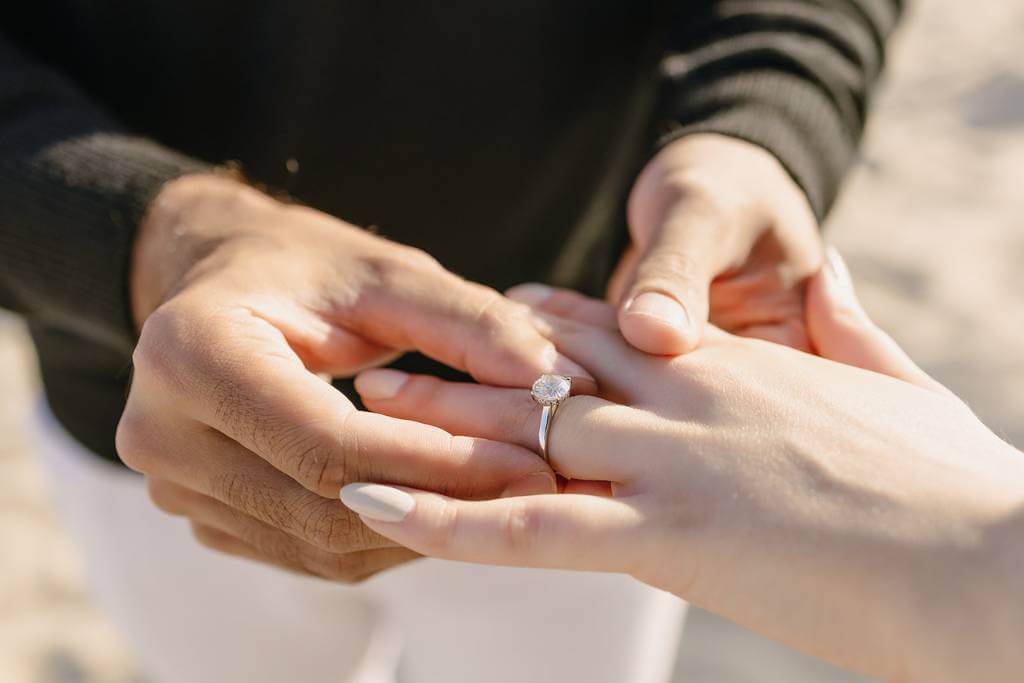
The metal sets the tone for the entire ring. Platinum and white gold are the most popular, but yellow gold is making a major comeback, and rose gold offers a romantic, vintage feel. What to look for in an engagement ring, metal-wise, is durability.
Copyright © Photo by Dolce Vita Makers
Platinum is the most durable but develops a “patina” (tiny scratches) over time, while white gold requires occasional re-plating to stay bright white.
Score Yourself: _/10
- Match the metal to the jewelry they wear most often.
- Consider skin sensitivity (Platinum is hypoallergenic).
- Factor in long-term maintenance costs for the metal.
Pro Tip:
- If your partner has a job where they work with their hands a lot, consider platinum. While it is more expensive than white gold, it is a naturally white metal that never needs to be dipped or replated to keep its color.
Checkpoint 8: Budget Clarity
There is no “three-month salary” rule; the only rule is what you are comfortable spending. What to look for in an engagement ring, budget-wise, is value. Understand how carat weight jumps (e.g., 0.99ct vs 1.00ct) can drastically change price and where you can “cheat” (like choosing a slightly lower color grade) to save money without sacrificing beauty.
Score Yourself: _/10
- Set a hard “ceiling” for your spending.
- Account for taxes, insurance, and the setting price (not just the stone).
- Prioritize the “Must-Haves” vs. “Nice-to-Haves.”
Checkpoint 9: Ring Size and Buyer Protections
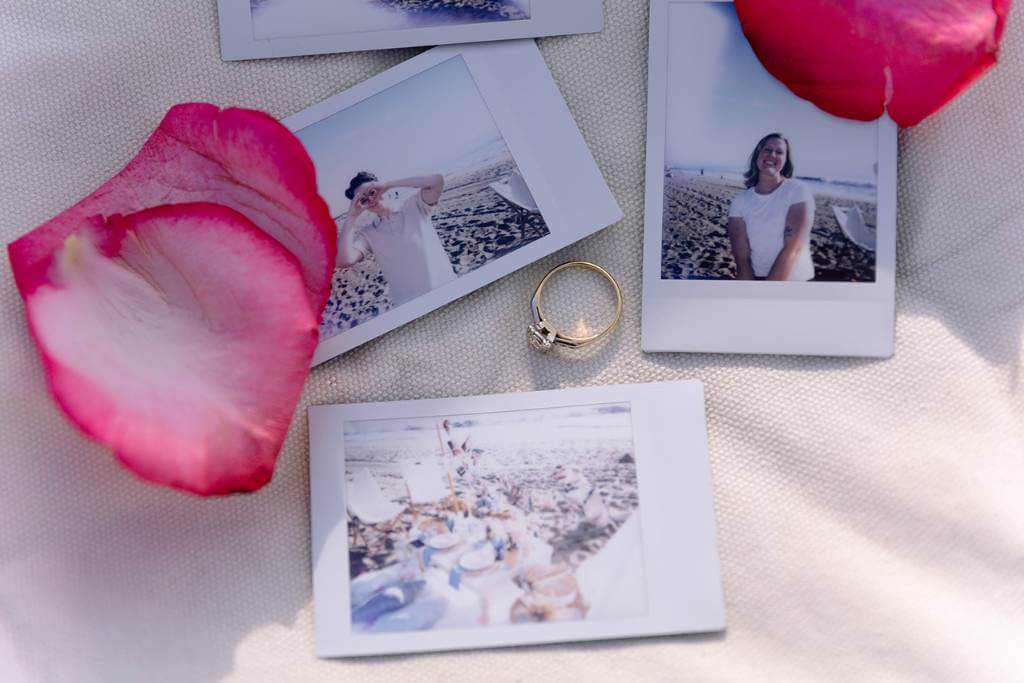
Getting the size right is tricky but important. You can borrow a ring they wear on their ring finger or ask a friend to help. Beyond size, you need a “safety net.” This includes a grading report, a solid return window, and a resizing policy.
Copyright © Photo by Dolce Vita Makers
If you are worried about timing, you can even learn how to propose without a ring while you wait for the perfect one to be finished.
Score Yourself: _/10
- Obtain a ring size (even if it’s an estimate).
- Confirm the return window is at least 30 days.
- Verify the jeweler offers a lifetime warranty or resizing service.
Pro Tip:
- If you are guessing the size, it is always safer to go slightly too big. Most jewelers find it much easier to resize a ring smaller than they do to add metal to make it larger.
Checkpoint 10: Proposal Day Plan
The ring is only half the battle. You need a plan to keep it safe and a vision for the moment. Consider where you will store it and how you will transport it.
To how to find the right engagement ring moment, consider when to propose and how long you should wait to propose based on your relationship’s unique timeline.
Score Yourself: _/10
- Identify a safe hiding spot (not a sock drawer!).
- Plan for ring safety during the proposal (especially at the beach or at height).
- Have a “Plan B” if the weather or logistics fail.
Style Shortcuts for the Right Ring
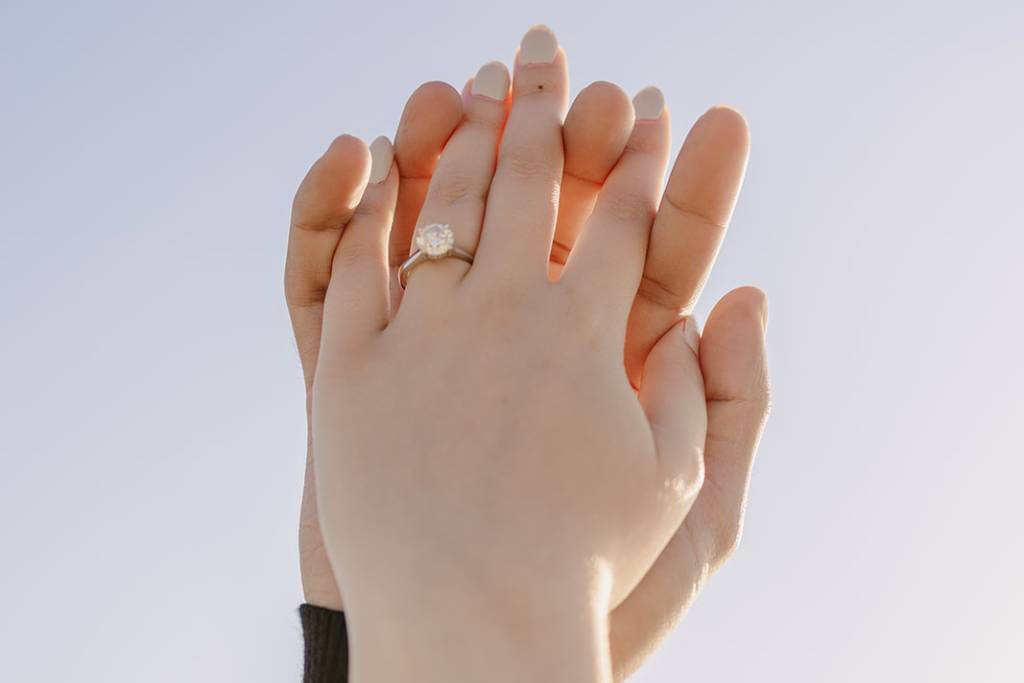
If you find yourself stuck in the “analysis paralysis” phase, use these shortcuts to narrow down how to choose an engagement ring style. Ask yourself, “What engagement ring is right for me to buy based on their personality?”
Copyright © Photo by Dolce Vita Makers
- The Minimalist: If they love clean lines and simple fashion, go with a Solitaire setting in a low profile.
- The Glamour Enthusiast: If they love sparkle and “extra” details, a Halo or Pavé setting will maximize the brilliance.
- The Vintage Soul: Look for Milgrain (beaded metal) or antique-inspired settings like a Three-Stone or Emerald cut.
- The Active Professional: Choose a Bezel setting (metal surrounding the stone) or a low-set Round diamond for maximum security.
If your score in the style category is under 7/10, we recommend pausing. Look at their “Saved” photos on Instagram or take a casual walk past a jewelry store window to see what catches their eye.
Engagement Ring Budget Tips
Creating a meaningful moment doesn’t require overspending. Here is what makes a good engagement ring purchase strategy:
- Prioritize Cut: A smaller diamond with an “Ideal” cut will look more beautiful and expensive than a larger diamond with a “Poor” cut.
- Go Lab-Grown: If size is the priority, lab-grown diamonds allow you to get a much larger stone for the same budget.
- Choose the “Under” Carat: Buying a 1.9-carat stone instead of a 2.0-carat stone can save you thousands while looking identical to the naked eye.
- Simple Setting, High Quality Stone: You can always upgrade the setting for an anniversary later; focus your budget on a high-quality center stone now.
- Plan for Hidden Costs: Always set aside 5-10% for insurance, taxes, and potential resizing.
Pro Tip:
- Always ask your jeweler if they offer a diamond upgrade program. Many shops will allow you to trade in your original stone later for a larger one if you hit a milestone anniversary, which takes the pressure off your initial engagement ring checklist budget.
Proposal Score Boosters
Once your ring score is solid (70+), it is time to shift your focus to the moment itself. Choosing the ring is the technical part; the proposal is the emotional part. Use these “boosters” to elevate your plan:
Copyright © Photo by Dolce Vita Makers
- For a quiet, intimate moment, check out these private proposal ideas.
- If you are in Southern California, browse the best places to propose in Los Angeles.
- Planning a dinner? Follow our restaurant proposal guide.
- For nature lovers, explore beach proposal ideas or park proposal ideas.
- Want a curated aesthetic? Look into a picnic proposal setup.
- Need professional help? Explore proposal planning services or luxury picnic proposals to take the logistics off your plate.
Building a solid plan for the “big ask” is the final step in learning how to choose an engagement ring and the experience that comes with it.
Your 70+ Score: Ready to Propose
If you’ve tallied your scores and hit 70 or higher, congratulations. You have successfully navigated style, stone choice, settings, metal, and budget. You have ensured buyer protections are in place and the ring size is at least a “close enough” estimate. You are no longer guessing; you are deciding.
If you are under 70, don’t rush. Identify the two lowest-scoring checkpoints on your engagement ring checklist and focus your energy there for one week. Once those scores go up, your confidence will follow.
Ready to make it official? Once you have the ring, contact us to help you plan the perfect setup so the moment complements the ring’s beauty. You now know exactly how to pick the right engagement ring.
FAQs
How do I choose an engagement ring if I’m not sure what they like?
The best way to how to know what engagement ring you want for them is to look at their “social cues.” Check their Pinterest, ask their closest friend, or look at the jewelry they wear daily. If they wear no jewelry, they likely prefer a minimalist, low-profile solitaire. When in doubt, “classic” is a safe bet for how to choose an engagement ring.
What should I look for in an engagement ring for everyday wear?
When considering what to look for in an engagement ring for daily use, focus on “durability” and “profile.” A good engagement ring for an active person is one with a setting that securely holds the stone (such as a 6-prong or bezel setting) and sits low on the finger to prevent snagging.
How do I pick the right engagement ring style for their lifestyle?
To select an engagement ring style based on lifestyle, match the ring’s complexity to their activity level. A nurse or athlete might prefer a simple, smooth band, while someone in a corporate or creative environment might prefer a more elaborate style, such as a halo or vintage design.
How do I choose a diamond for an engagement ring without getting overwhelmed?
To simplify how to choose a diamond for an engagement ring, follow the “Cut is King” rule. Focus on an Excellent cut grade, then find a Color and Clarity that looks good to your eye (usually G-H color and VS2 clarity) rather than chasing perfect grades on paper.
What size diamond should I get for an engagement ring?
The what size diamond for an engagement ring question depends entirely on your budget and their preference. Instead of focusing on a specific carat weight, look at the “mm” measurements. Some shapes (like Ovals) look larger than others of the same weight.
Which finger does the engagement ring go on?
In most Western cultures, it goes on the fourth finger of the left hand. You can read more about which finger the engagement ring goes on to understand the history and traditions behind it.